


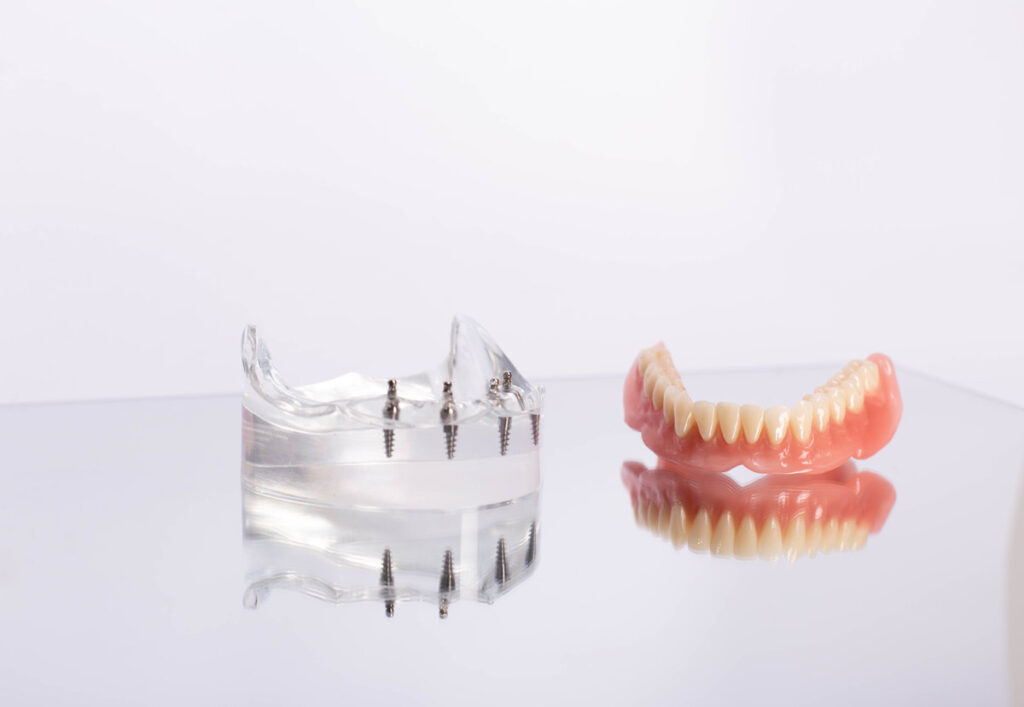
When you’re facing tooth loss, choosing between dental implants and dentures feels like standing at a crossroads. Each path offers distinct advantages, and the decision you make will impact your daily comfort, confidence, and long-term oral health. Understanding the full picture of both options helps you move forward with clarity.
At Lumin8 Dentistry in Lakewood, WA, Dr. Jun Carrington and our experienced team guide patients through these important decisions every day. We provide comprehensive restorative solutions, from dental implants to traditional dentures, ensuring you receive personalized care that fits your unique needs and lifestyle.
Dental Implants Offer Long-Term Stability and Function
Dental implants provide a permanent tooth replacement solution. These titanium posts are surgically placed into your jawbone, where they fuse with the bone. Once healed, a custom crown or bridge attaches to the implant, creating a restoration that looks, feels, and functions like a natural tooth. Research from the National Institutes of Health shows that dental implant prevalence among adults with missing teeth increased dramatically from 0.7% in 1999-2000 to 5.7% in 2015-2016, reflecting growing patient confidence in this treatment option.
The stability of implants means you can eat your favorite foods without restriction. You won’t need to avoid crunchy vegetables, chewy meats, or sticky foods. Implants also preserve your jawbone by providing the stimulation that natural tooth roots once offered. This prevents the bone deterioration that commonly occurs after tooth loss, helping maintain your facial structure and youthful appearance. For patients requiring multiple tooth replacements, full mouth reconstruction with implants can restore complete function and aesthetics.
Implants Require Surgical Placement
The surgical aspect of dental implants is worth careful consideration. The procedure involves placing titanium posts into your jawbone, which requires adequate bone density and healthy gums. Some patients need bone grafting before implant placement, which extends the treatment timeline and adds to the overall cost. Healing typically takes several months as the implant integrates with the bone. During this period, you may need to follow specific dietary restrictions and maintain careful oral hygiene around the surgical sites.
Costs Reflect the Permanence
Dental implants are a significant financial investment upfront. The cost includes the surgical placement, the implant post, the abutment that connects the post to the restoration, and the crown or bridge itself. While many patients find the long-term value justifies the expense, the initial price point can be a barrier. However, implants can last decades with proper care, potentially making them more cost-effective over time compared to dentures that require replacement or adjustment.
Dentures Provide Affordable Immediate Results
Full and partial dentures offer a non-surgical solution for tooth replacement. These removable prosthetics can replace several missing teeth or an entire arch. The treatment process is faster than implants, often requiring just a few appointments to take impressions, create the dentures, and make final adjustments. For patients who need immediate tooth replacement or who cannot undergo surgery due to health conditions, dentures provide an accessible option.
The affordability of dentures makes them an attractive choice for many patients. Without the need for surgery or lengthy healing periods, you can restore your smile relatively quickly. Dentures have improved significantly in recent years, with better materials and construction techniques creating more natural-looking and comfortable prosthetics. Modern dentures can restore your ability to eat, speak, and smile with greater confidence than leaving gaps in your smile.
Adjustment Period and Maintenance
Dentures require an adjustment period as your mouth adapts to the prosthetic. Some patients experience initial discomfort, speech changes, or difficulty eating certain foods. Unlike implants, dentures rest on your gums rather than anchoring into the jawbone, which can lead to slipping or movement when eating or speaking. This means some foods may remain challenging to eat comfortably.
Dentures also require daily removal and cleaning, as well as proper storage when not in use. Over time, changes in your jawbone and gum tissue can affect how well dentures fit, requiring adjustments or replacement. Most dentures need replacement every five to eight years as wear and tissue changes occur. Without tooth roots stimulating the jawbone, bone loss continues beneath dentures, which can alter your facial appearance and affect denture fit over time.
Get Exceptional Dental Care With Implants or Dentures at Lumin8 Dentistry
Whether dental implants or dentures better suit your needs depends on your specific situation, health, budget, and personal preferences. Dr. Jun Carrington brings years of experience and a commitment to staying at the forefront of dental innovation, providing patients throughout the Lakewood area with the highest standard of restorative care. Our team uses state-of-the-art technology and takes a patient-centered approach to ensure your comfort and satisfaction.
We understand that investing in your smile is an important decision, so we offer comprehensive consultations to discuss all your options, answer your questions, and develop a personalized treatment plan tailored to your goals. Our modern office provides a welcoming environment where you can receive the care you need with confidence. Contact us today to schedule your consultation and discover which tooth replacement option is right for you.