


Losing more than one tooth in a row can affect how you eat, speak, and feel about your smile. Many people assume a dental bridge is only designed to replace a single missing tooth, but that is not always the case. Depending on how many teeth are missing and where they are located, a bridge may still be a practical and effective solution for restoring your smile and protecting the health of your remaining teeth.
At Lumin8 Dentistry in Lakewood, WA, we help patients explore all of their dental bridge options so they can make informed decisions about their care. Dr. Jun Carrington brings comprehensive training from the Kois Center, a nationally recognized center for advanced dental education, which means treatment planning here goes beyond aesthetics to consider the full picture of your oral health.
How a Dental Bridge Works
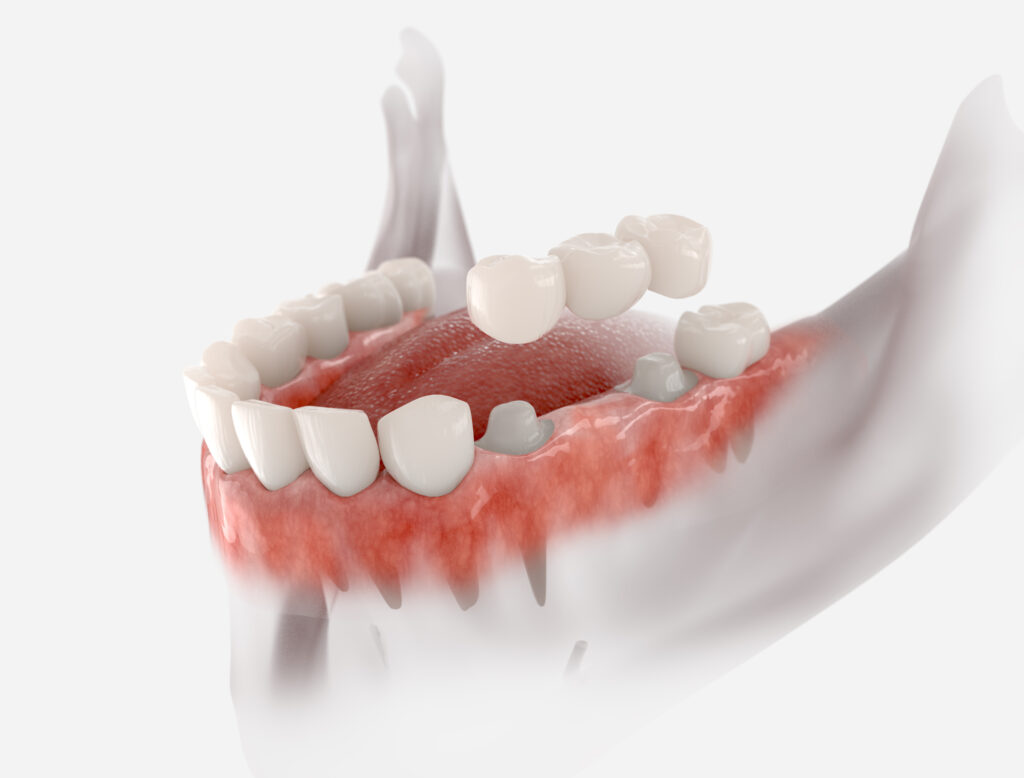
A traditional dental bridge consists of one or more artificial teeth, called pontics, that are anchored in place by crowns fitted over the healthy teeth on either side of the gap. Those anchoring teeth, referred to as abutment teeth, bear the load of the restoration and keep it securely in position. This design has been used reliably in restorative dentistry for decades and remains one of the most common solutions for replacing missing teeth.
The number of pontics a bridge can support depends on several factors, including how strong the abutment teeth are, where in the mouth the gap is located, and how much biting force that area typically endures. A bridge replacing two or even three consecutive missing teeth is possible in the right clinical circumstances, though the more teeth being replaced, the greater the demand placed on the supporting teeth.
When a Multi-Tooth Bridge Is an Option
Understanding what scenarios may warrant a multi-tooth bridge can help inform your decision-making.
The Role of Abutment Teeth
For a bridge to work across multiple missing teeth, the abutment teeth must be healthy, well-rooted, and strong enough to carry the added load. If those teeth have existing damage, decay, or bone loss, they may not be reliable anchors. Dr. Carrington’s approach to treatment planning is to evaluate each patient’s full oral health profile before recommending a bridge, because a restoration built on a compromised foundation is unlikely to hold up over the long term.
The location of the gap in your mouth also matters. Front teeth endure less biting force than back teeth, making multi-tooth front bridges more feasible in certain cases. Posterior bridges that handle heavier chewing loads require careful evaluation to ensure the structure will remain stable and functional over time.
Implant-Supported Bridges as an Alternative
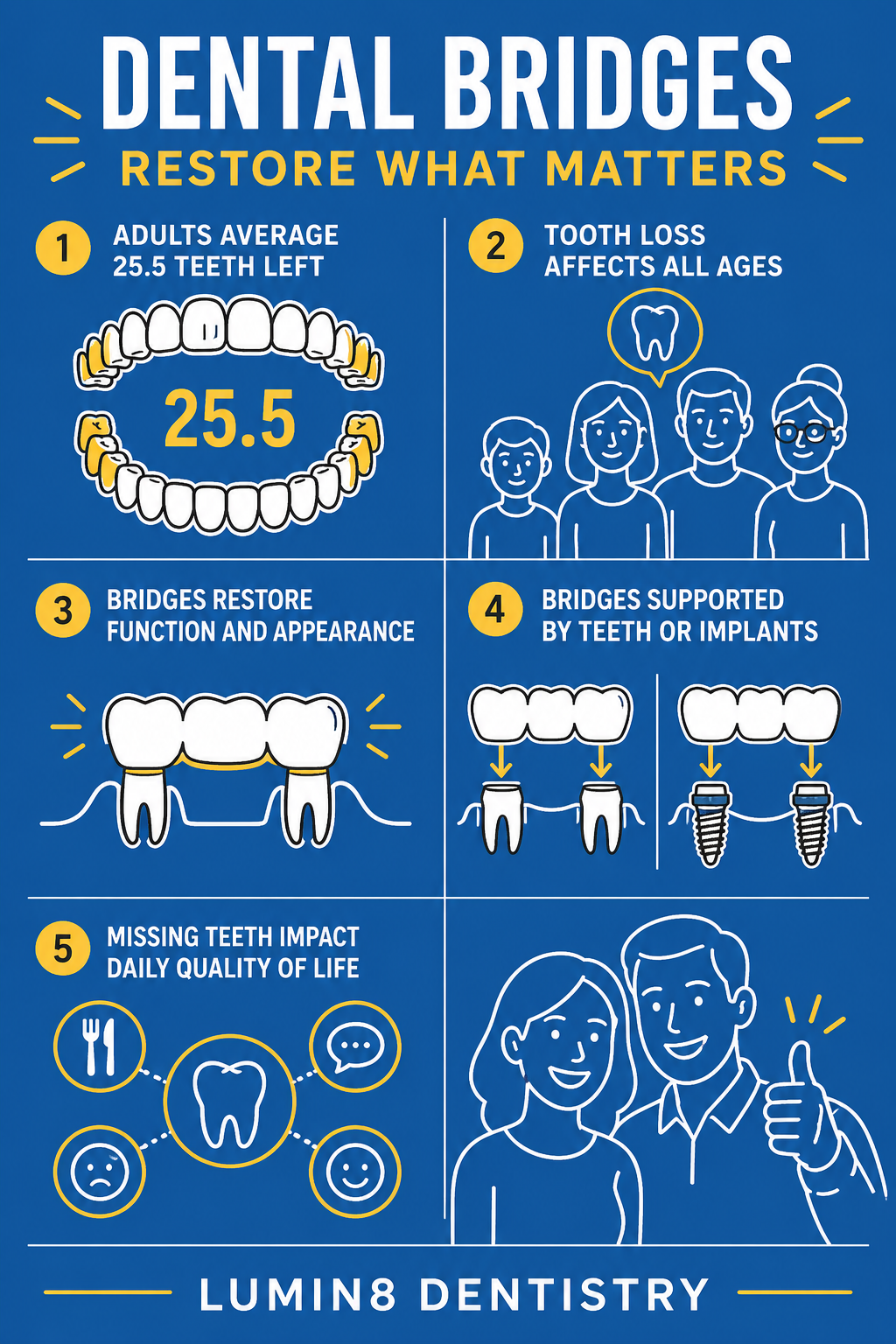
When natural abutment teeth are not strong enough, or when a patient is missing a larger number of consecutive teeth, an implant-supported bridge may be a better fit. This option uses dental implants as anchoring points instead of existing teeth, eliminating the need to modify healthy adjacent teeth and distributing biting force more evenly through the jawbone.
Implant-supported bridges also help preserve bone density in the jaw, which can deteriorate over time after tooth loss. According to the National Institute of Dental and Craniofacial Research, adults ages 20 to 64 have an average of just 25.5 remaining teeth, a figure that reflects how common tooth loss is across all age groups. Whether supported by natural teeth or implants, a bridge can restore function and appearance in ways that benefit your overall quality of life.
What to Expect During the Process
The process begins with a thorough examination that includes digital X-rays and a review of the bone and gum tissue supporting the area where teeth are missing. If a traditional bridge is recommended, the abutment teeth are gently reshaped to accommodate the crowns. Impressions or digital scans are then taken so the bridge can be custom-fabricated to fit your bite and match your surrounding teeth.
A temporary bridge is placed while the permanent restoration is being made. Once it is ready, the final bridge is fitted, adjusted, and cemented into place. Most patients are comfortable throughout the process, and we offer sedation options for those who prefer additional relaxation during treatment.
Caring for Your Bridge
A well-made bridge can last many years with proper care. Daily flossing under the pontic with a floss threader or water flosser is important for keeping the gum tissue beneath the bridge healthy. Regular cleanings and checkups allow our team to monitor the restoration and catch any potential issues early. For patients who have concerns about the cost of care, we offer Cherry financing with 0% interest for 24 months, making it easier to move forward without delay.
It is also worth noting that removable options, such as full and partial dentures, offer a different experience from a fixed bridge. Bridges do not need to be removed for cleaning and will not shift while you are eating or speaking, which many patients find more comfortable and convenient day-to-day.
Start Your Smile Restoration at Lumin8 Dentistry
If you are dealing with multiple missing teeth and wondering whether a bridge could be the right solution, we are here to walk you through your options. At Lumin8 Dentistry, Dr. Carrington takes time with every patient to understand their goals and design a treatment plan that fits their unique situation, drawing on his Kois Center training and years of restorative experience serving the Lakewood community.
Reach out to our team today by completing our online appointment request and taking the first step toward a complete, confident smile.