


Quick Contact
There is a particular moment when someone realizes they are hiding their smile: turning away during photos, covering their mouth when they laugh, or avoiding certain foods because a gap where a tooth used to be makes eating feel awkward. Missing teeth affect more than appearance. They shift your bite, can cause surrounding teeth to drift, and over time lead to bone loss in the jaw. The longer a gap is left untreated, the more complex the solution becomes.
Dental bridges offer a proven, permanent way to close those gaps and restore both function and confidence. At Lumin8 Dentistry in Lakewood, WA, Dr. Jun Carrington and our team provide custom bridge restorations that look completely natural and are built to last. As part of our restorative dentistry services, bridges are one of the most reliable solutions available for replacing one or more missing teeth.
What Are Dental Bridges?
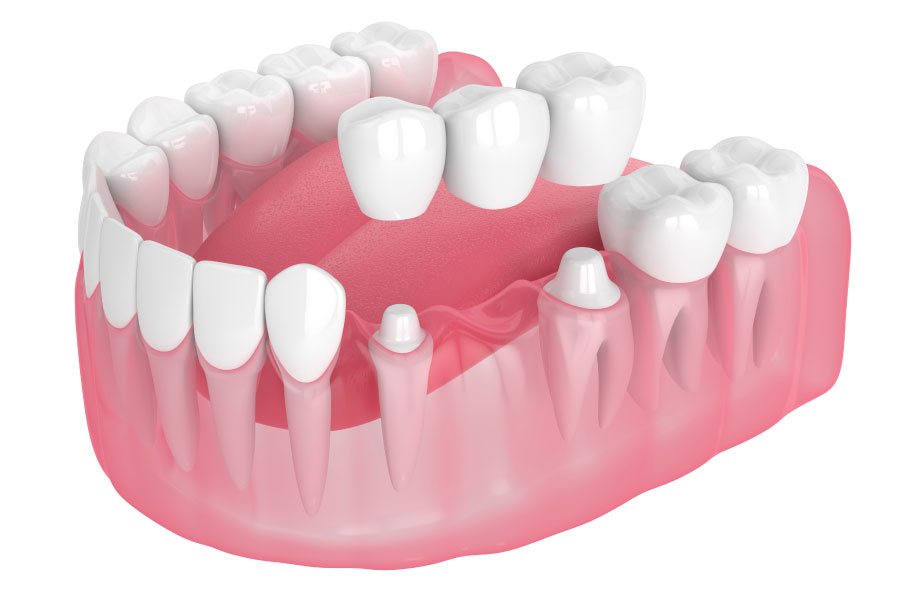
A dental bridge is a fixed restoration that literally bridges the gap created by one or more missing teeth. It consists of one or more artificial teeth, called pontics, held in place by crowns cemented onto the natural teeth on either side of the gap. Once bonded, a bridge becomes a permanent part of your smile. Unlike removable dentures, you do not take it out for cleaning, and you do not worry about it shifting while you eat or speak.
The American College of Prosthodontics reports that roughly 178 million Americans have lost at least one tooth. Whether your tooth loss is the result of an injury, decay, or gum disease, a bridge can restore the look and function of your smile with minimal disruption to your daily life.
Types of Dental Bridges We Offer
Not all bridges are the same, and the right type depends on the location of your missing teeth and the health of the teeth surrounding the gap.
Traditional Bridges
The most common type, traditional bridges involve placing crowns on the teeth immediately adjacent to the gap, with the pontic suspended between them. They are strong, durable, and well-suited for most situations where healthy teeth exist on both sides of the gap.
Cantilever Bridges
Cantilever bridges are used when there is only one viable tooth next to the gap. While less common than traditional bridges, they are an effective option in specific situations.
Maryland Bridges
Maryland bridges use a metal or porcelain framework bonded to the backs of adjacent teeth, rather than full crowns. They are more conservative because they require less alteration of surrounding teeth, making them a good option in certain cases.
Implant-Supported Bridges
For patients who prefer not to use adjacent natural teeth as anchors, dental implants can support a bridge instead. This approach preserves your neighboring teeth and provides the most stable, bone-preserving foundation available.
The Benefits of Dental Bridges
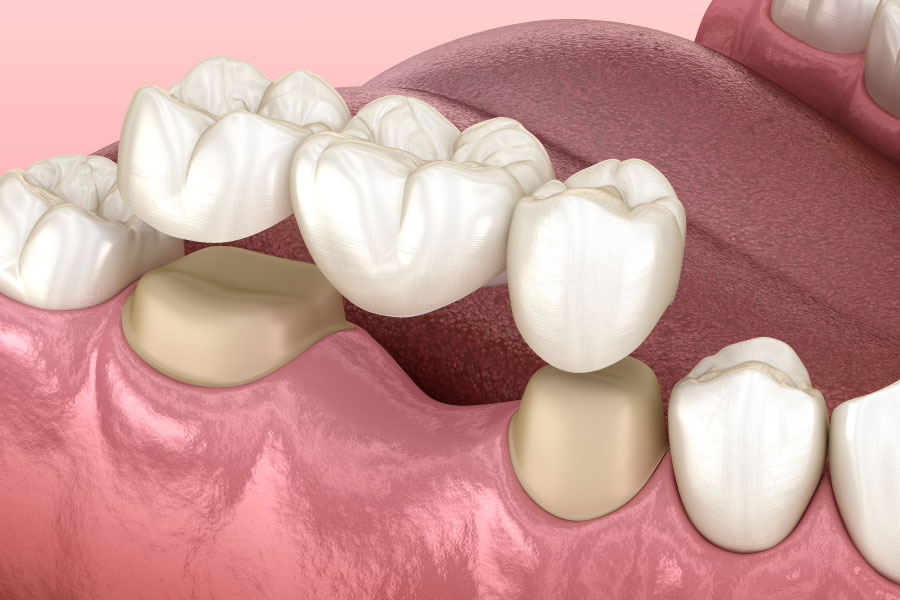
Bridges restore far more than appearance. Replacing a missing tooth prevents the surrounding teeth from drifting into the gap, which can lead to bite misalignment and increased risk of decay in hard-to-clean spaces. Bridges also distribute bite forces evenly across your remaining teeth, reducing stress on individual teeth.
Patients consistently report being able to eat comfortably again, speak without self-consciousness, and smile without hesitation after receiving a bridge. That functional restoration has a meaningful impact on daily life.
The Bridge Process at Lumin8 Dentistry
Getting a dental bridge typically requires two visits to our Lakewood office. During your first appointment, Dr. Carrington prepares the abutment teeth by reshaping them to accommodate the crowns, then takes digital impressions using our advanced intraoral scanner. A temporary bridge is placed while your permanent restoration is crafted in a dental laboratory.
At your second visit, the temporary bridge is removed, the permanent one is tested for fit and bite, and it is permanently cemented into place. We check your bite carefully and make any needed adjustments before you leave.
Caring for Your Dental Bridge
With proper care, a dental bridge can last a decade or more. Brush twice daily, and use a floss threader or bridge floss to clean beneath the pontic where food and plaque can accumulate. Attend your regular checkups and cleanings every six months so we can monitor your bridge and the surrounding teeth. If you grind your teeth at night, a night guard can protect both your bridge and your natural teeth.
Restore Your Complete Smile at Lumin8 Dentistry
Living with missing teeth is not something you have to accept. Dental bridges at Lumin8 Dentistry offer a reliable, natural-looking solution that can restore your smile, your bite, and your confidence. We proudly serve patients from Lakewood, Parkland, University Place, Tacoma, and throughout the South Sound region. Contact us today to schedule your consultation with Dr. Carrington.
Affiliations & Education