


Most people know they should brush twice a day and visit the dentist regularly. And yet, the gap between what we know and what we actually do is wider than most would expect. Oral health in the United States is a story told in contrasts: a country with access to some of the most advanced dental care in the world, yet tooth decay still ranks among the most common chronic diseases. Understanding where things stand, and why they matter, is the first step toward making better choices for yourself and your family.
At Lumin8 Dentistry in Lakewood, WA, we see the real-world impact of these numbers every day. Dr. Jun Carrington and our team work with patients at all stages of their oral health journey, from those who consistently practice preventive care to those who have avoided the dentist for years. No matter where you start, the data below offers both a reality check and a reason for hope.
What the Data Says About Dental Visits
Routine dental care is the basis of a healthy mouth, yet millions of Americans skip it every year. According to the CDC, about 40% of adults have not visited a dentist in the past year. The consequences of that gap compound over time. What begins as a small cavity left untreated can progress to infection, tooth loss, or the need for more complex restorative treatment down the line.
Why People Skip the Dentist
Cost and fear are two of the most commonly cited barriers to dental care. The CDC also notes that dental care is the most widespread unmet health need for children in the United States. For adults, lack of insurance coverage or the assumption that a visit is only necessary when something hurts keeps many people away from the chair longer than they should be.
The good news is that preventive care is far less costly in both time and money than treating problems that have been allowed to grow. Our preventive dentistry services are designed to keep patients ahead of problems rather than chasing them.
Tooth Decay Is Still a Major Problem
Tooth decay remains one of the most extensive chronic conditions in the country, affecting both children and adults. The National Institute of Dental and Craniofacial Research reports that over 90% of adults aged 20 to 64 have had at least one cavity in their permanent teeth. Among adults 65 and older, that figure remains stubbornly high, with the majority experiencing some form of untreated decay or tooth loss.
These numbers are not inevitable. Most cavities are preventable with consistent brushing, flossing, regular cleanings, and the occasional dental sealant when appropriate. Small investments in prevention routinely hinder the need for dental crowns, extractions, or more intensive restorations down the road.
The Gum Disease Numbers Are Just as Striking
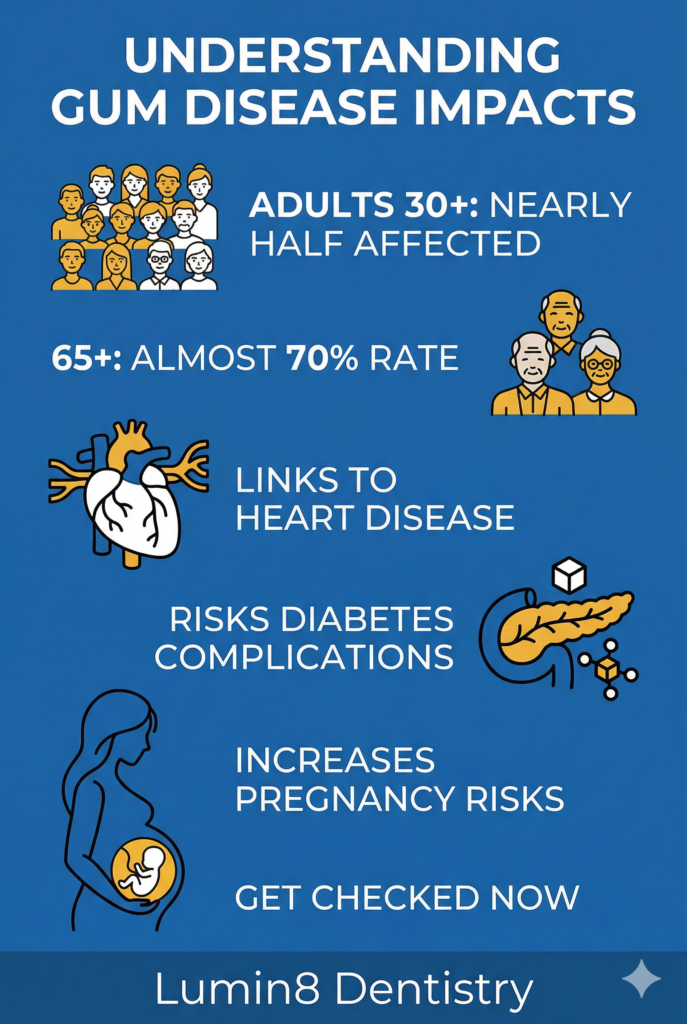
Tooth decay gets most of the attention, but gum disease is equally common and often harder to detect in its early stages. Research published through the CDC found that nearly half of American adults aged 30 and over have some degree of periodontal disease. That percentage climbs significantly among adults 65 and older, reaching nearly 70%.
The Systemic Connection
Gum disease is not just a dental condition. Research has linked chronic periodontal disease to increased risk of heart disease, diabetes complications, and adverse pregnancy outcomes. The mouth truly is a window into overall health, and the state of your gums can offer meaningful signals about what is happening elsewhere in the body. Staying on top of your cleanings and check-ups is one of the most straightforward ways to keep both your oral and systemic health in check.
Restorative Concerns Are on the Rise
Tooth loss continues to drive demand for restorative care. The American College of Prosthodontics estimates that approximately 178 million Americans are missing at least one tooth, and about 40 million are missing all of their teeth. Solutions like dental implants have become the preferred standard of care for replacing missing teeth because they address both function and appearance in a lasting way.
What These Numbers Mean for You
Statistics tell a story, but they do not write your outcome. The patterns seen in national data are largely driven by inconsistent care and delayed treatment, both of which are preventable. Visiting a dentist regularly, addressing small problems before they worsen, and asking about options for improving your smile are all decisions that pay meaningful dividends over time. The research is clear that the earlier patients engage with their oral health, the better their long-term results tend to be. Knowing where the country stands is useful context, but what matters more is where you stand.
Schedule Your Visit at Lumin8 Dentistry in Lakewood, WA
At Lumin8 Dentistry, Dr. Jun Carrington brings Kois Center training and a genuine commitment to personalized care to every appointment. Whether you are due for a routine cleaning, curious about smile makeover options, or interested in learning more about replacing missing teeth, we are here to help you make informed decisions about your oral health. We also offer flexible financing options through Cherry, including 0% interest for 24 months, so cost does not have to stand between you and the care you need.
We welcome patients from Lakewood and the surrounding communities, including Federal Way, Tacoma, and families near Joint Base Lewis-McChord. Contact our office today to schedule your appointment and take a step toward better oral health, whatever the national numbers may say about everyone else.